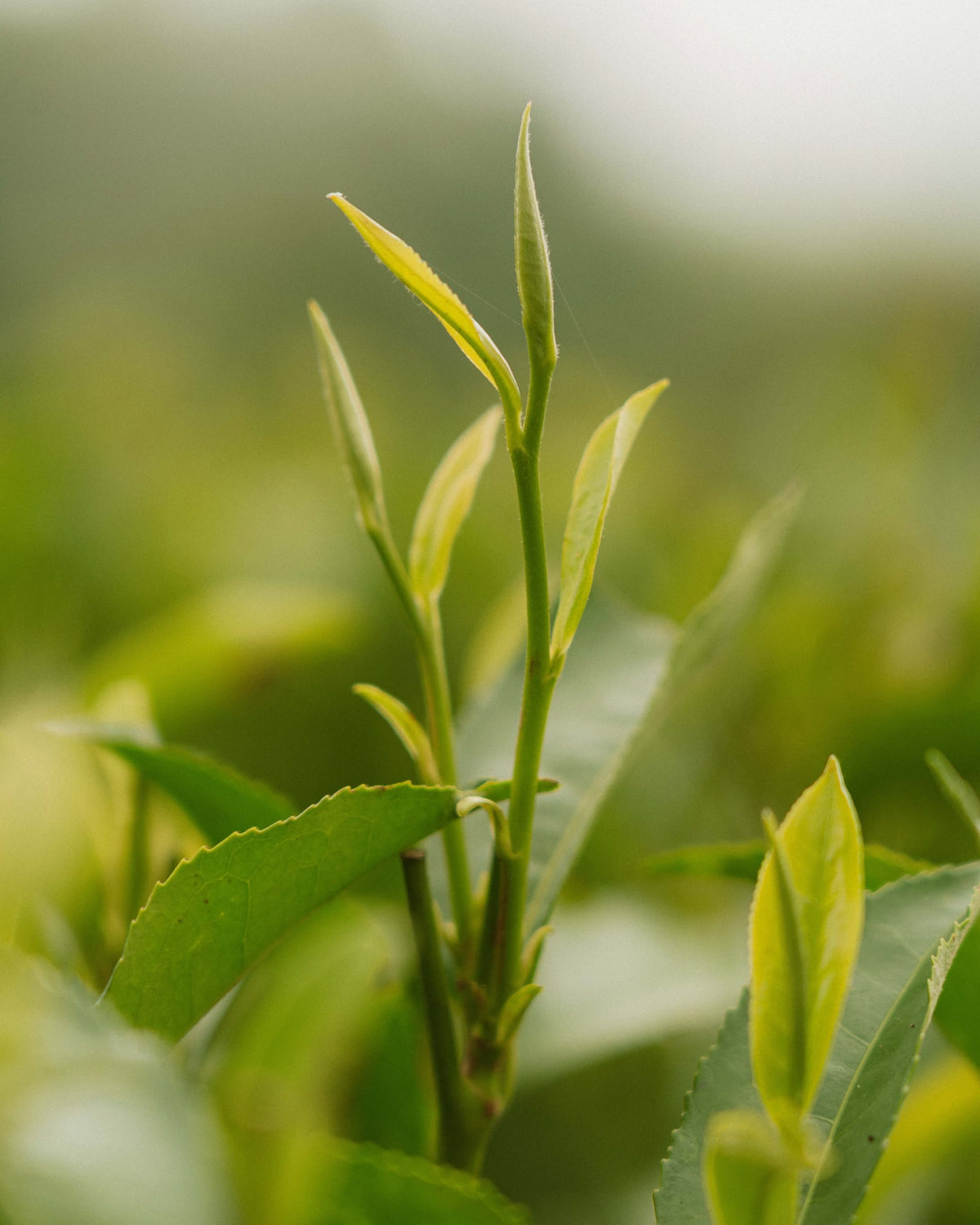
High in the cloud forests of the Valle del Cauca, six sisters keep Colombia's only remaining tea estate alive. Part 3 of our Andes series.
In the first part of this series I wrote about why the Andes may be the most exciting frontier in tea today. In the second we went to Peru, to the forgotten gardens of Madre Térra. Now we travel north, across the equator, to the other garden behind Eduard/Andes: Bitaco, in Colombia's Valle del Cauca.
The last tea estate in Colombia
Colombia is a coffee country. Everyone knows that. Far fewer people know that it once tried to become a tea country too.
In the middle of the 20th century, as Colombia looked for new crops to diversify its agriculture, tea was planted in several parts of the Andean highlands. There were around four of these early projects. One by one, they disappeared. Bitaco is the only one that remains – as far as we know, the last tea plantation in Colombia.
It lies in the corregimiento of Bitaco, in the municipality of La Cumbre, a couple of hours' drive into the mountains from Cali. The gardens climb from 1,700 to 2,050 metres, on the edge of the San Antonio cloud forest, almost on the equator. Mist rolls in every afternoon, the light is intense, and the plants grow all year round.
What struck me most is how much of Bitaco is not tea at all. More than half of the land is left as forest. The tea grows in clearings between the trees, and the forest stays exactly where it is.

Six sisters named María
Bitaco is family-owned. It belongs to the Llanos family – today six sisters, and all six are called María. The same family also owns Agrícola Himalaya, Colombia's biggest tea importer.
The family's work does not stop at the edge of the garden. Through their foundation, led by María Estela, they support the communities around the estate. I had the chance to meet her, and to see how closely the plantation and its neighbours are connected.
Criolla: a plant that became of this place
The tea plants at Bitaco are known as criolla. I love this name. In colonial times, criollo described people born in the Americas whose roots lay somewhere else. It is a word for something that arrived from far away and, over generations, became of this place.
That is exactly what happened to these plants. Tea came to South America from Asia, and here, in the Colombian Andes, it adapted to a new home: new soil, new light, a life without winter. The result is not a copy of Asian tea. It is something of its own.
A welcome in the mountains
I visited Bitaco in January 2025 and spent a few days at the estate. From the very first moment, I felt welcome. Compared to the small family team in Peru, Bitaco is a bigger company, and I got to meet many of the people who make it work. They took extraordinary care of me. We followed the tea from the field to the finished leaf, and I even made my own black tea.

The factory is impressive. Bitaco has invested in modern machinery, and since 2021 the factory has run on solar energy, which is a real step for a place this remote.
The person leading the tea making is Claudio Gutiérrez. He is young, and he works like a scientist. Every variable counts for him: the weather on the day of the harvest, the moisture in the leaf, the temperature and timing of every step. Watching him work, I understood how much detail and care goes into each cup from Bitaco.

The pluckers in red
My favourite moments were in the fields. At Bitaco, plucking is treated as one of the most important parts of making tea, and the pluckers are seen as an elite team: the people who make tea happen. They wear a special uniform with a red scarf, and they are proud of what they do. You can see it in the way they work.

And wherever the pluckers are, the sheep are never far away. They graze between the rows and keep the weeds down. They have no interest in the tea itself, so they can wander freely through the garden without doing any harm.

Tasting Colombia, fruit by fruit
What I love about Colombian teas is how clean and clear they are, and how naturally fruity. During my visit, the team prepared a tasting next to a table full of Colombian fruit. We tasted the teas and went looking for their aromas on that table, matching what we found in the cup to the fruits in front of us. In our teas you can still find them: passion fruit, mango, ripe tropical sweetness.
Three teas from Bitaco are part of Eduard/Andes: a green and a white as pure teas, and our very first blend.
Verde Esmeralda – “emerald green”
Verde Esmeralda is a green tea grown at around 1,900 metres. Its colour recalls the emeralds Colombia is famous for. Delicate tropical fruit, a soft, creamy texture and a fresh, clean finish.

Nieve Andina – “Andean snow”
Nieve Andina is a white tea named after the snowy peaks of the Andes, made only from buds and the youngest leaves. It is allowed to oxidise slightly longer than most white teas and then rests for six months, which gives it ripe fruit, gentle wood and a natural sweetness.

Besos de Café – “coffee kisses”
Besos de Café is our very first blend: Colombian black tea and roasted Colombian coffee beans in one cup. In Colombia, coffee came before tea. Here, the two finally meet.

The last of its kind
Most tea regions are celebrated long after their story has been written. Bitaco is different. It is the last of its kind in Colombia, kept alive by a family that believed in it, a team that treats every leaf with care, and a forest that was allowed to stay.
You can find Verde Esmeralda, Nieve Andina and Besos de Café individually or as part of the Eduard/Andes Experience, together with Sumaq Yaku and Wulong Suka from Madre Térra in Peru.