Portrait of a smiling Eduard/ customerPortrait of a smiling Eduard/ customerPortrait of a smiling Eduard/ customer1,000+ tea drinkersalready enjoy our teas.

Verde Esmeralda (Organic)

Green Tea, 40g

Green tea without the bitterness - fresh, fruity and naturally sweet.

  • From the Colombian Andes, easy-going and light
  • Works hot and as a cold brew
  • Grown in Bitaco at 1,900 m, good for three infusions
€ 12,00€ 0,40 per cup
€ 30,00 / 100 g
incl. VAT, plus shipping
Choose your quantity
In stock – delivered to your door in 2 to 4 working days
Secure checkout
PayPal payment iconKlarna invoice payment iconKlarna instant payment iconVisa payment iconMastercard payment iconApple Pay payment iconGoogle Pay payment iconAmerican Express payment iconShop Pay payment icon
Your legal guarantee rights

“This was my first time getting tropical fruit notes in a tea, so it was really exciting. The sweetness in this tea also reminded me a little of some young sheng pu-erhs. This feels like a cup of tea at its lightest transformation - so green, gentle and delicate”

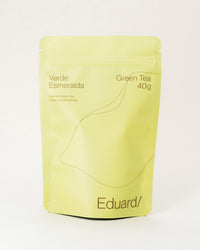
Verde Esmeralda organic green tea in an Eduard/ pouch (40 g)
Glass of Verde Esmeralda cold brew with ice
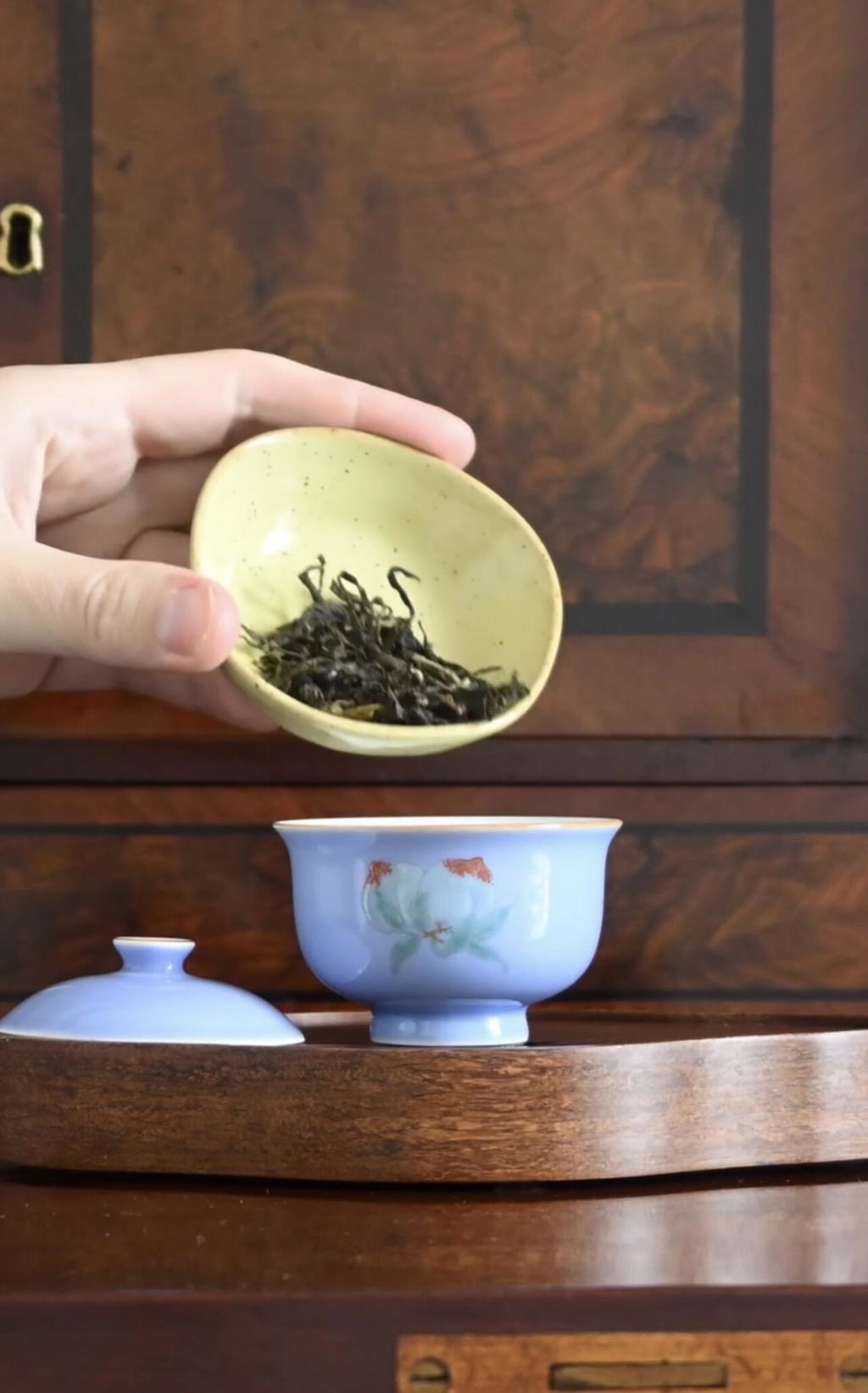
Dry leaves of Verde Esmeralda on a plate
Verde Esmeralda leaves being spooned from the pouch
Verde Esmeralda organic green tea in an Eduard/ pouch (40 g)
Glass of Verde Esmeralda cold brew with ice
Dry leaves of Verde Esmeralda on a plate
Verde Esmeralda leaves being spooned from the pouch

Description

Verde Esmeralda comes from the first harvest of 2026 at Bitaco, Colombia's only remaining tea estate, at 1,900 metres in the Andes. It is a green tea for newcomers and experienced tea drinkers alike, and it does away with the idea that green tea has to be bitter: its character is naturally sweet and refreshing.

The aroma mirrors the landscape it grows in. Bright notes of tropical fruit such as passion fruit sit alongside sweet, green tones reminiscent of steamed edamame and a herbal touch of thyme. The cup is lively and balanced, and it works just as well hot as it does as a cold brew. The same leaves carry three infusions.

The name refers to Colombia's famous emeralds – a nod to the vivid green of both the leaves and the infusion.

Flavour

  • Passion fruit
  • Steamed Edamame
  • Thyme

Character

  • Fruity
  • Floral
  • Sweet
  • Roasted
  • Spicy
  • Vegetal
  • Intensity
  • Caffeine

Origin

Bitaco, Colombia
  • Origin Bitaco, Colombia
  • Tea Maker Bitaco Tea
  • Average Altitude 1900 meters
  • Cultivar Creole Variety
  • Harvest Time January 2026

Meet the Maker

Bitaco Tea, Colombia
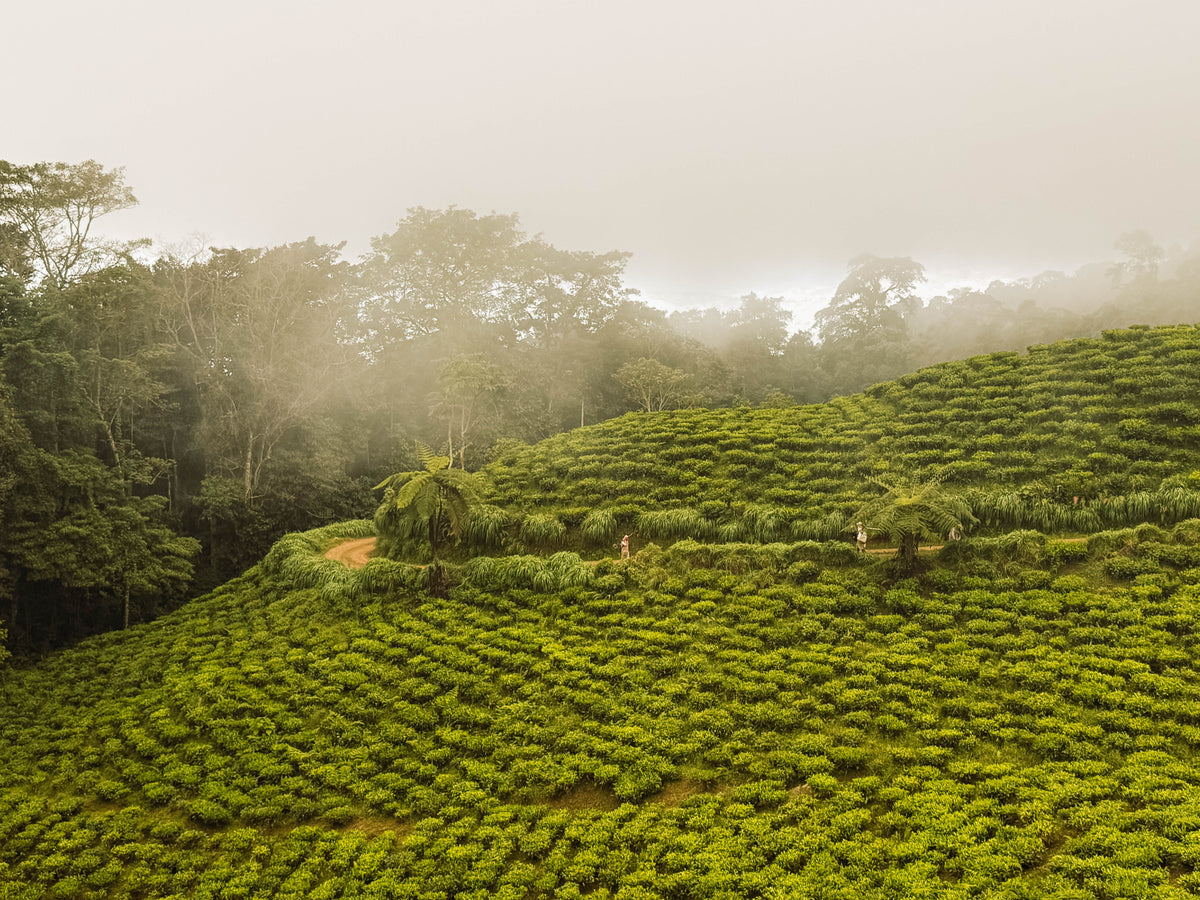
In the cloudy Valle del Cauca in the Western Andes, Agrícola Himalaya owns Colombia’s only remaining tea production site. Over the decades, their evolution from traditional black tea production to a variety of specialty styles has allowed them to define the character of an otherwise unknown terroir. The entire tea factory runs on solar energy. Today, the family business is in the hands of six sisters, all named María.

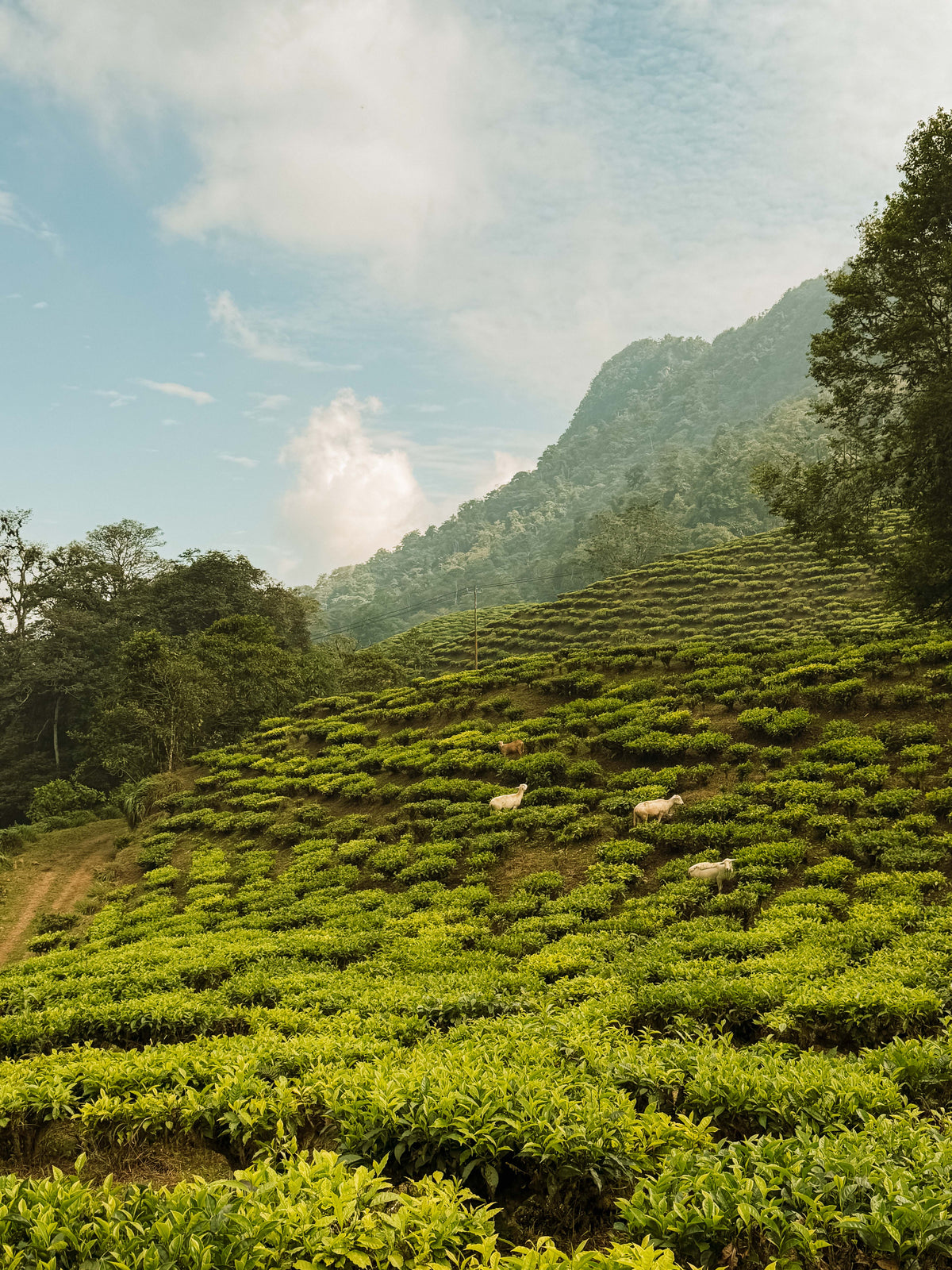
Misty tea garden on a hillside in ColombiaEduardo with the team in front of the Agrícola Himalaya sign in ColombiaTea garden on a hillside in Colombia

Brewing Suggestions

  • Water Temperature80°C
  • Tea / Water2 grams or 2 tsp / 100ml
  • 3 Brewings / Duration1:30 – 1:30 – 2:00
  1. Heat the waterSoft water — filtered or spring water. Hard water makes the tea taste flat.
  2. Measure the leaves2 g per 100 ml, which is about two teaspoons.
  3. Let it steepPour over and give it one and a half minutes. No stirring, no pressing.
  4. Strain and enjoyStrain when the time is up. For the second and third infusion, repeat step 3.
  • WaterCold and soft, filtered or spring water
  • Tea / Water1 gram or 1 tsp / 100ml
  • Steeping Time6 – 8 hours in the fridge
  1. Fill the carafe1 g per 100 ml straight into a carafe or bottle.
  2. Add cold waterTop it up with cold, soft water — filtered or spring water.
  3. Into the fridgeSix to eight hours. Setting it up before bed works well.
  4. ServeStrain the leaves out and enjoy.

The Andes

Where nature meets craft

From Colombia to Chile, the Andes cover nearly 9000 km of deserts, icy summits, and rainforests. In the north, equatorial climate brings alternating wet and dry seasons. In the mountains of Peru and Colombia, tea plants have been able to flourish year-round since arriving from Asia in the early 20th century.

Tea garden in an Andean valley with a farmer and sheep Andean valley with a river and snow-capped peaks Tea pickers at work in a tea field in the Andes Woven basket with freshly plucked tea leaves Eduardo smiling in a tea garden in the Andes Open sack of dried tea leaves

30 days satisfaction guarantee

Taste it first, then decide.

Open the bag and brew the tea. Take a few cups to decide. If it isn't for you, email us within 30 days of delivery and we'll refund you in full — no return shipment. Keep the tea or pass it on to someone who'll enjoy it.

Reviews

Customer Reviews

Based on 1 review
100%
(1)
0%
(0)
0%
(0)
0%
(0)
0%
(0)
S
Simon

This was my first time getting tropical fruit notes in a tea, so it was really exciting. The sweetness in this tea also reminded me a little of some young sheng pu-erhs. This feels like a cup of tea at its lightest transformation - so green, gentle and delicate
About Us

Leaves & Stories

Eduard/ is a contemporary tea label founded in Berlin in 2025 by tea sommelier Eduardo Molina. We release curated collections of teas from a single tea-growing region. Each collection is a bridge into that region and an invitation to discover its terroir, people, and stories.

Eduardo Molina, founder of Eduard/, smiling with a glass of tea
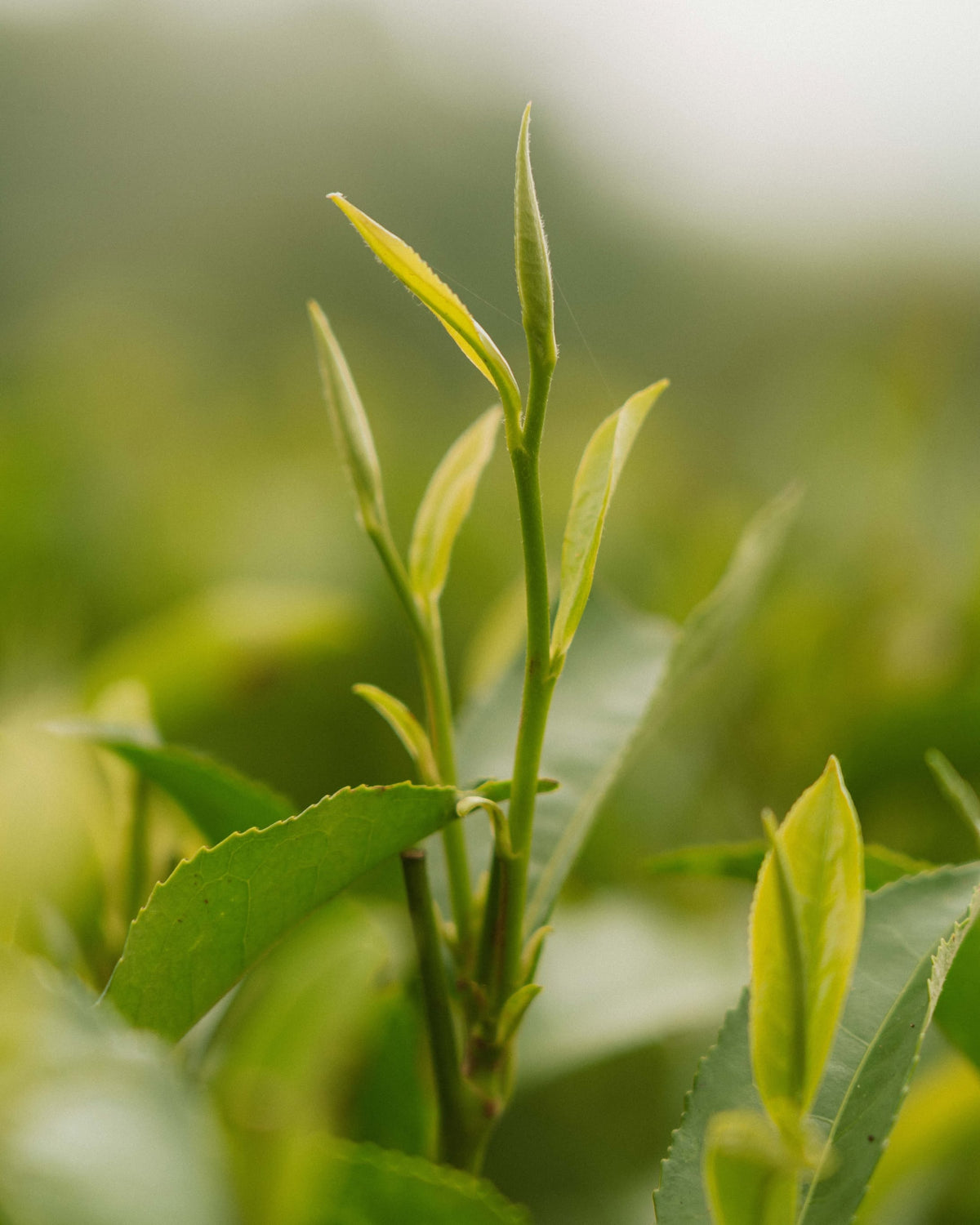
Close-up of fresh tea shoots on a tea bush

FAQ

How do I brew Verde Esmeralda?

Use 2 g of leaves — about two teaspoons — per 100 ml of water at 80 °C. Let it steep for one and a half minutes, then strain. The same leaves carry two more infusions: one and a half minutes, then two.

Does it work as a cold brew?

Yes. Put about 1 g of leaves per 100 ml into cold, soft water, leave it in the fridge for six to eight hours, then strain. Drink it as it is — no ice, no lemon: the tea is fresh and fruity enough on its own, and both would cover it up.

Which water is best for this tea?

Water is almost everything that ends up in the cup, so its quality decides a large part of what you taste. Filter it if you can; without a filter, use a low-mineral spring water such as Volvic. Hard, strongly mineralised water makes the tea taste flat — the fruity, herbal notes disappear behind the minerals, and what is left is dull and slightly chalky. Green tea reacts to water more sensitively than almost any other tea.

We work with the Aarke Purifier, which turns even mediocre tap water into water worth drinking — but a simple filter jug does the job too. And the same applies to cold brew: filtered water, straight into the fridge.

Can I brew the leaves more than once?

Absolutely! And the second infusion is often the best one. Unlike the broken leaf in a supermarket tea bag, whole leaves need the first infusion just to open up, and they change as they go: bright and fragrant at first, then denser and sweeter, finally quiet and mineral. In Chinese gongfu cha, eight to fifteen infusions are perfectly normal. The steeping times for the later infusions are printed on the pouch.

Do intensity and caffeine go together?

Less than most people assume. What you taste as intensity comes from tannins, oxidation and roasted notes — caffeine itself is barely noticeable in the cup. A pale, gentle tea can carry more of it than a dark, robust one. That is why we show the two scales separately.

The reason lies in the plant. Caffeine is not there for our benefit but as a defence: the tea plant builds it to keep insects away from its youngest shoots. That is exactly where it sits most densely — in the bud and the top leaves, while older, tougher leaves hold less. A tea made from buds alone, pale in the cup and delicate on the palate, therefore often sits higher on the caffeine scale than a dark black tea. Variety, altitude, temperature and the moment of harvest all play their part, and so does the cup itself: how much leaf you use, how hot the water is and how long it steeps decide how much caffeine actually ends up in your brew.

The scale helps to put that in perspective. Depending on leaf and brew, a cup of tea sits somewhere between 10 and 70 milligrams of caffeine — at the bottom light infusions of stems and older leaves, at the top a generously dosed black tea from young leaf. A cup of coffee starts at around 90 milligrams and climbs to 200 and beyond, depending on bean, roast and dose. Coffee, in other words, begins roughly where tea leaves off.

The curious part: dry tea leaf holds a higher share of caffeine than a coffee bean does. What decides is not the content of the raw material but how much of it makes its way into the water — and that takes surface. A bean is ground; a whole leaf gives up only part of what it holds in two minutes of steeping. Which is exactly why matcha is the exception among teas: it is milled to a fine powder and not infused but drunk whole, leaf and caffeine together. A bowl of matcha therefore sits closer to coffee than to tea.

How should I store the tea?

Keep the bag closed and store it dry, dark and away from strong smells. A cool spot at room temperature works better than the fridge.

Is Verde Esmeralda organic?

Yes. Verde Esmeralda comes from certified organic cultivation and carries the European organic seal. Behind that seal is a demanding inspection process that the garden goes through year after year.

How long does delivery take?

Your order is packed in Berlin and reaches you within two to four working days. Shipping within Germany is free from 69 €.

What if I don't like the tea?

Then it's on us. Write to us within 30 days of delivery and you'll get your money back in full. Nothing needs to be sent back — keep the tea or pass it on.

Verde Esmeralda (Organic) € 12,00