The story behind Eduard/
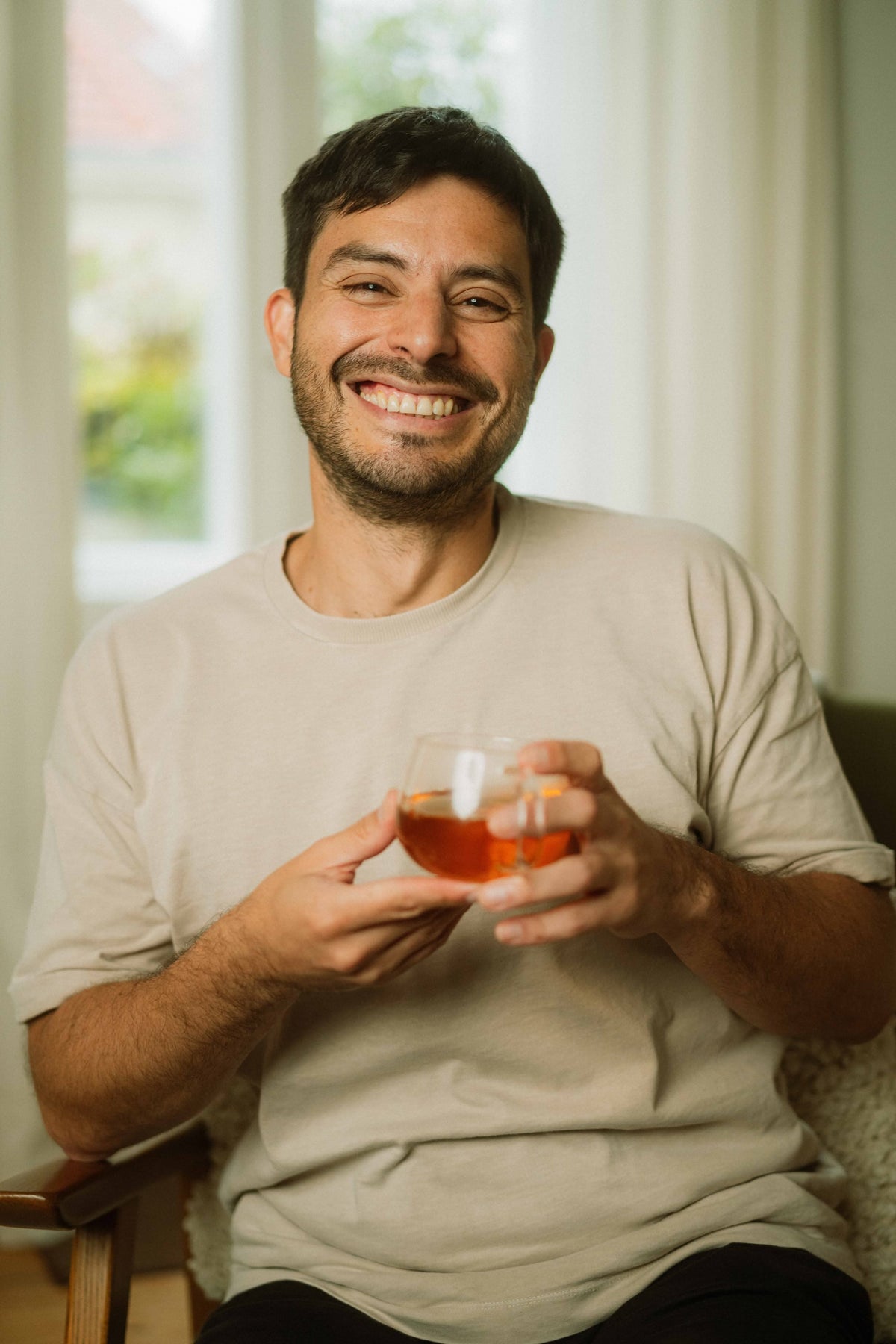
I’m Eduardo Molina, tea sommelier and founder of Eduard/.
In almost twenty years with tea I have travelled all over the world and come to know the fascinating stories of the people who make it. Tea is a cultural achievement with a tradition reaching back thousands of years. More than seventy countries grow it. These regions have spent centuries refining their craft, and I have enormous respect for that. Most of what I know, I learned from them.
Every region brings its own flavours, rituals and customs – and that is exactly where it becomes easy to lose the thread. So where do you begin?
When I founded Eduard/ in 2025, I wanted the label to work like a series of journeys rather than a catalogue. One region per collection, five teas that complement each other and give you the full picture.
The slash after Eduard stands for the connection between the people who make the tea and the people who drink it. I don’t make this tea – the producers in Nepal, in Sikkim, in the Andes do. I bring it to you and tell you its story.
There is one rule at Eduard/: if I haven’t visited it, I don’t buy it. I want to have stood in the field, seen the production and shaken hands with the people before a tea comes to us. For the same reason, every image and every video you see here is our own – none of it is bought in.
We wrote down three things at the very beginning, and to this day they decide which tea makes it into our collections:
- Quality – in the taste, and in how a tea comes about: grown naturally, paid for fairly, with a benefit for the people on the ground.
- Relationships – with the gardens we work with, and with you. We stay where it is good.
- Curiosity – the appetite to try tea from a region you do not know yet.
In the end it is not only about tea, but about what you experience along the way. That is why we stand at the table ourselves at our tastings, why we do the pop-ups, why there is a story on every pouch. And it is why I now hear sentences I first said myself twenty years ago: I had no idea. This tastes nothing like I expected.


How I got here
I grew up in Chile, on tea bags and a lot of sugar. I discovered good tea in my early twenties, working at the Ritz-Carlton in Santiago: forty loose-leaf teas on a wall, names I had never heard. I told my parents I was going to be a tea sommelier. They said the job did not exist. I said: then I will make sure it does. My father asked me for a plan – and that plan turned into a list I worked through over the years that followed:
It led me to sommelier school, because tasting carries over from wine to tea. Onto a cruise ship, where for two years I went looking for the tea hour in every port. Into my own flat in Santiago, which I turned into a tea studio – four tastings a day by the end. Into seven tea shops I helped build in Chile. To Sri Lanka, to Darjeeling, to Japan and to Taiwan, where I stayed for a year: Mandarin classes during the week, tea gardens at the weekend. It is 107 countries by now. Number 107 was Nepal – and that is where our first collection came from.
Today I live in Berlin. This is where our journey with Eduard/ began. I’m glad you’re part of it.

Purity: trust you can taste.
We work exclusively with tea gardens that we have visited in person – and whose high standards of craft and careful treatment of soil and plants we have seen for ourselves on the ground.
Every one of our teas comes from a single garden – we do not blend origins.
We choose our partner gardens with care. What matters is that the producers work in step with nature. Soil needs time to forget what was once chemistry: the longer a farm works without pesticides, the more alive its soil becomes, and the more character the tea growing out of it gains. That is part of why we look for these farms where barely a gust of wind reaches them: in remote highland valleys, far from roads and from other people’s fields.
Where a tea carries the EU organic seal, you can rely on it: behind it stands a strict standard with annual inspections. A tea without the seal, on the other hand, does not necessarily come from conventional farming.
For many small, regional farms, organic certification is barely feasible, for financial and logistical reasons. Yet it is often these very growers, with all their passion, who produce the most extraordinary teas. So what counts for us is something else: the attitude of the people behind the tea – a commitment to natural cultivation that can be tasted, with or without a certificate.


Our packaging: one material, no hidden layers
The questions we ask about a tea, we ask about its pouch as well: what is it made of, and what becomes of it once the last cup is brewed?
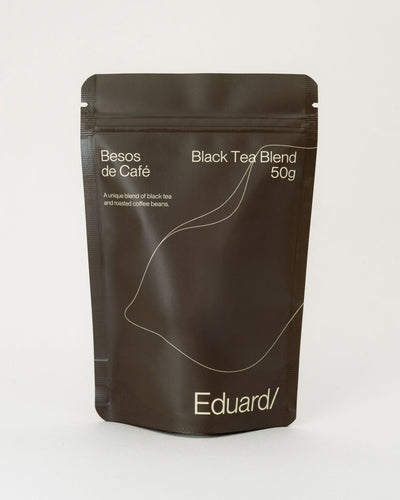
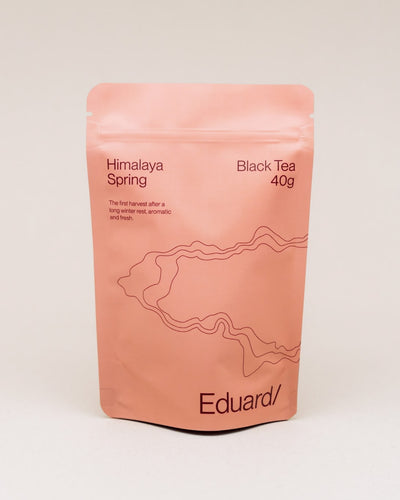
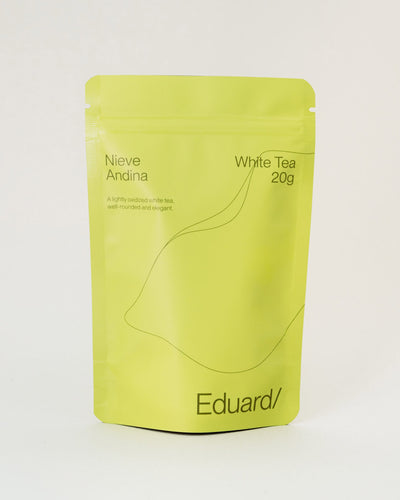
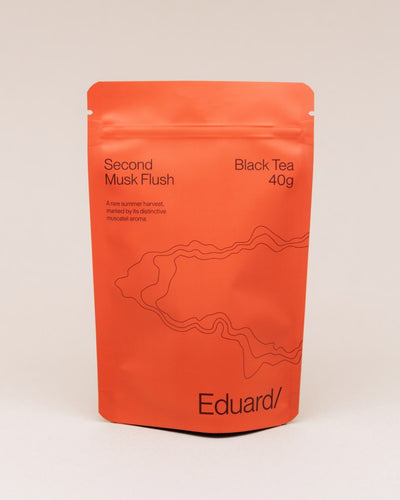
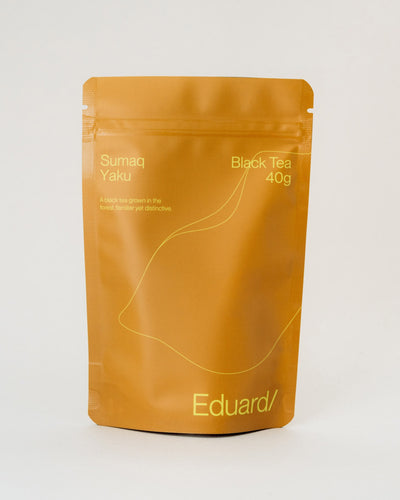
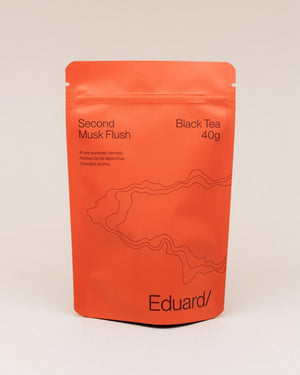
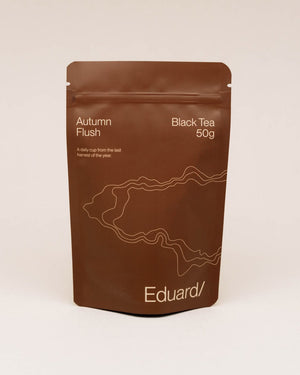
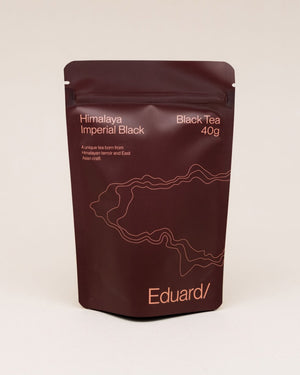
Plenty of tea pouches look like paper and are really a composite: a wafer-thin layer of plastic or aluminium is glued to the inside and can no longer be separated from the paper. In Germany, packaging like that usually ends up being incinerated rather than recycled. That is why our pouch is made from one material only – no aluminium, no second layer. This makes it recyclable: once it is empty, it goes in with the packaging recycling – in Germany, the Gelbe Tonne. It still keeps light, moisture and oxygen reliably away from the tea.
What is printed on it is just as clear: the name of the region the tea comes from, who made it and exactly when it was harvested.
Alongside that, what makes this one tea what it is – its terroir, its character, its story. If you want to go deeper, a QR code on the pouch takes you further.
We do not leave the brewing to chance either: water, leaf and steeping times for several infusions are printed on the pack for each tea individually – because every tea behaves differently and every harvest has its own balance. A batch number makes each pouch traceable back to its origin.
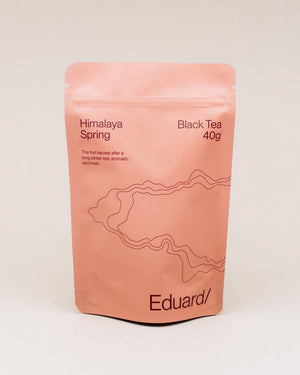
Even the colour of the pouch tells you something: within a collection, the shade reflects the intensity – the darker the tone, the stronger the tea.
For us the two belong together: clarity about the material, clarity about the contents.


By hand, with care: Mosaik Berlin
There are partnerships you go looking for once you grow – and there are the ones that were there from the start. Since our first collection in January 2026 we have worked with Mosaik, the Berlin workshops where more than 1,000 people with disabilities find work that fits their abilities.
Every pack of tea is weighed, filled and sealed by hand – with a care that would be hard to automate.
The shortest route
It is hard to make it any shorter: our tea travels straight from our producers around the world to Mosaik in Berlin – no interim warehouse, no detour. There it is packed, and from there it goes straight into the post to you.
That was one of the reasons we chose Mosaik. With no interim warehouse, there are no trips to one and back out again either – the tea takes the direct route.
To us this collaboration is not a side project next to the actual business, but part of how we understand tea: as the result of human care rather than anonymous processes. Direct communication, a shared idea of quality and a feel for the product that meets our own standards – we find all of that at Mosaik.
Where others bet on speed, we bet on hands that know what they are doing. And on those hands being the same ones since day one.