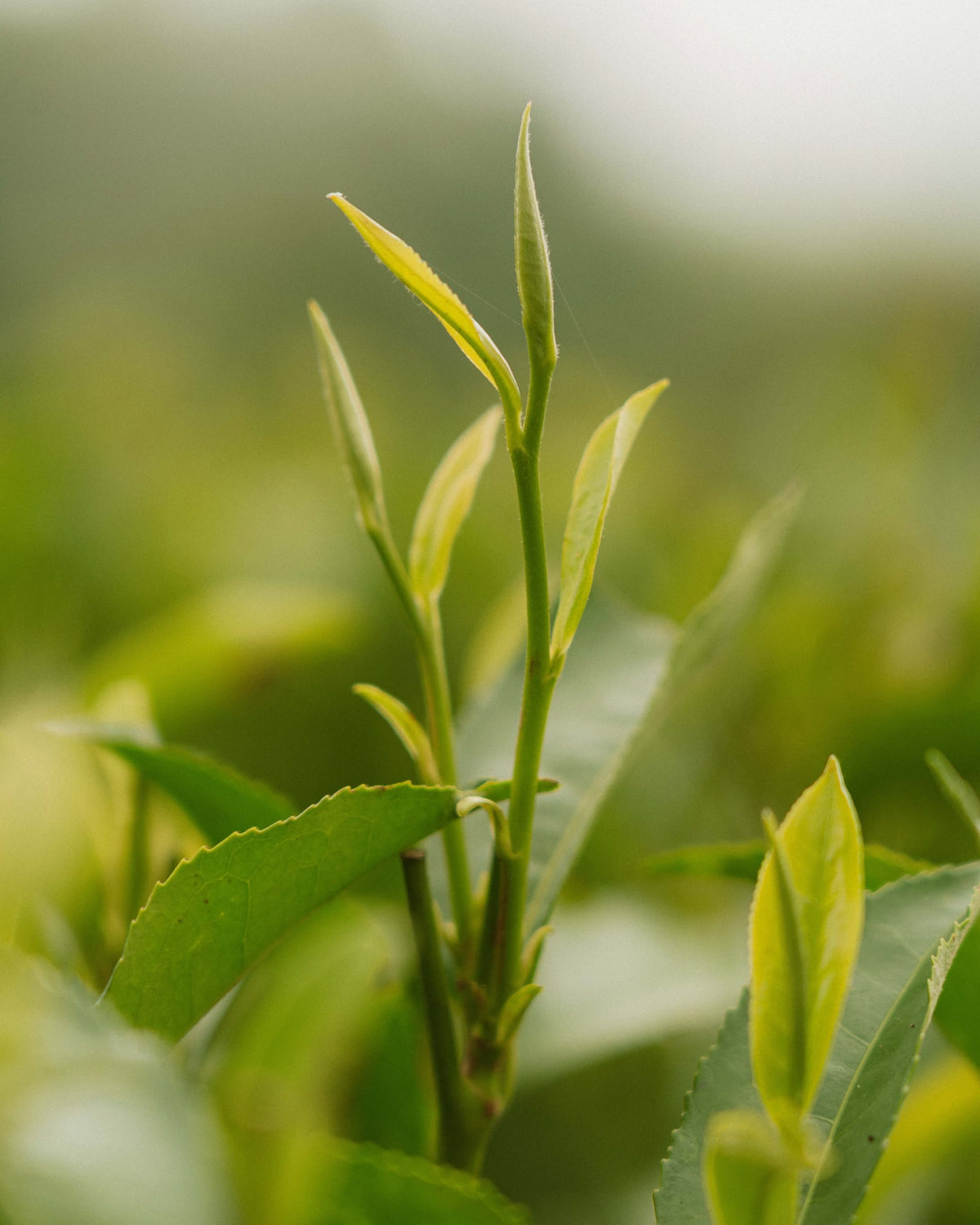
In a Peruvian valley near Cusco, tea bushes planted more than a century ago are being harvested again. Part 2 of our Andes series.
In the first part of this series I wrote about why the Andes may be the most exciting frontier in tea today. Now I want to take you to one of the two gardens behind Eduard/Andes: Madre Térra, in the Valle de Huyro, in the highlands of Cusco, Peru. Of all the places I visited for this collection, this is the one that still gives me goosebumps.
Forty teas on a table
In June 2025 I was in Peru as one of the jury members of the first Artisanal Peruvian Tea Competition. In front of us stood more than forty teas from twenty small producers, many of them made by people who had only just begun.
One name kept coming back. Madre Térra surprised us with every tea they presented, each one different, each one with its own clear voice. They took one of the first places. That is when I knew I had to meet them.
A few days after the competition, we were plucking tea together in one of their gardens in the Peruvian Andes, surrounded by wild forest.

A tea industry that almost happened
Tea arrived in Peru around 1913, when a consignment of seeds is said to have come from Japan by steamship. A senator planted the first bushes on his farm in Huyro. It worked. Over the following decades the plantings expanded into the hundreds of thousands, experts were brought in from Ceylon, and a factory was built in the valley. For a moment, Peru was building a genuine tea industry.
Then it collapsed. Economic crisis, political upheaval and cheap imported tea from Argentina – the factory fell quiet and the industry effectively disappeared.
But the plants stayed.

The plants that stayed
They are still there, more than a century old now, growing semi-wild in the highland forest, unpruned and largely forgotten. And in the last few years a new generation of Peruvian tea makers has begun harvesting from them again.
When the industry left, nature took the gardens back. Today the tea no longer stands in neat rows on a cleared slope. It grows in agroforestry, as one part of an ecosystem, sharing the land with cacao, coffee and orchids. Old bushes, deep roots, wild growth, a landscape nobody was watching: this is the kind of raw material that people in more famous regions would build entire brands around.
Nobody knows exactly what is growing here. The plants came from Japan and later from Sri Lanka, but no records were kept of which cultivars arrived. Universities in Peru have only recently begun to study the genetics of the country's tea plants. Until they have answers, our pouches say what is true: cultivar unknown.

Peruvian tea barely leaves the country. The volumes are small, and they are spoken for at home – not least by Peru's best restaurants and cafés. We are the first to bring it to Europe.
Four generations, and one return
Madre Térra means Mother Earth. Behind the name is the Ccama Puma family, now in its fourth generation of tea makers. In a valley where so many walked away from tea, they stayed.

Our host was Brice, the youngest tea maker of the family. He had lived in Europe and played football professionally in France. When COVID came, he went home to Peru – and there he realised he had to stay, and help put Peruvian tea back on the map.

A craft still finding its grammar
In Uji, in Darjeeling, in the Wuyi mountains, the grammar of tea has been settled for a very long time. In the Valle de Huyro there is no orthodoxy yet. The tea makers are working things out in real time – how long to wither, how far to oxidise, how to roll, what this particular leaf from this particular slope actually wants to become. Every harvest teaches them something, and you can taste the progress from one season to the next.
Two teas from Madre Térra are part of Eduard/Andes. Both were harvested in May 2026.
Sumaq Yaku – “beautiful water”
Sumaq Yaku is a black tea from some of the oldest tea plantations in Peru. Its name means “beautiful water” in Quechua. It grows at around 1,500 metres and tastes of honey, acacia blossom and dates – warm, sweet and elegant, with real depth.

Wulong Suka – an idea being worked out
Wulong is one of the most technically demanding things you can attempt with a tea leaf. Attempting it in a country that is only now rebuilding its tea craft is ambitious. At Madre Térra, it began with the grandmother of the family, Saruka – Suka to those who love her – who started making wulong about fifteen years ago, when nobody else in the valley did. This tea carries her name.
Wulong Suka grows at around 2,100 metres, lightly oxidised and lightly roasted: orchid first, then vanilla, then green leaves. It does not taste like a Taiwanese wulong. It was never going to. It tastes like an idea being worked out, and I find that far more moving than another safe cup.

Taste the beginning of a chapter
Most of us encounter a tea region long after the world has agreed it is important. With the Valle de Huyro, we are arriving at the beginning of the chapter instead of the end.
You can find Sumaq Yaku and Wulong Suka individually or as part of the Eduard/Andes Experience, together with three teas from Bitaco in Colombia – whose story we will tell in the next part of this series.