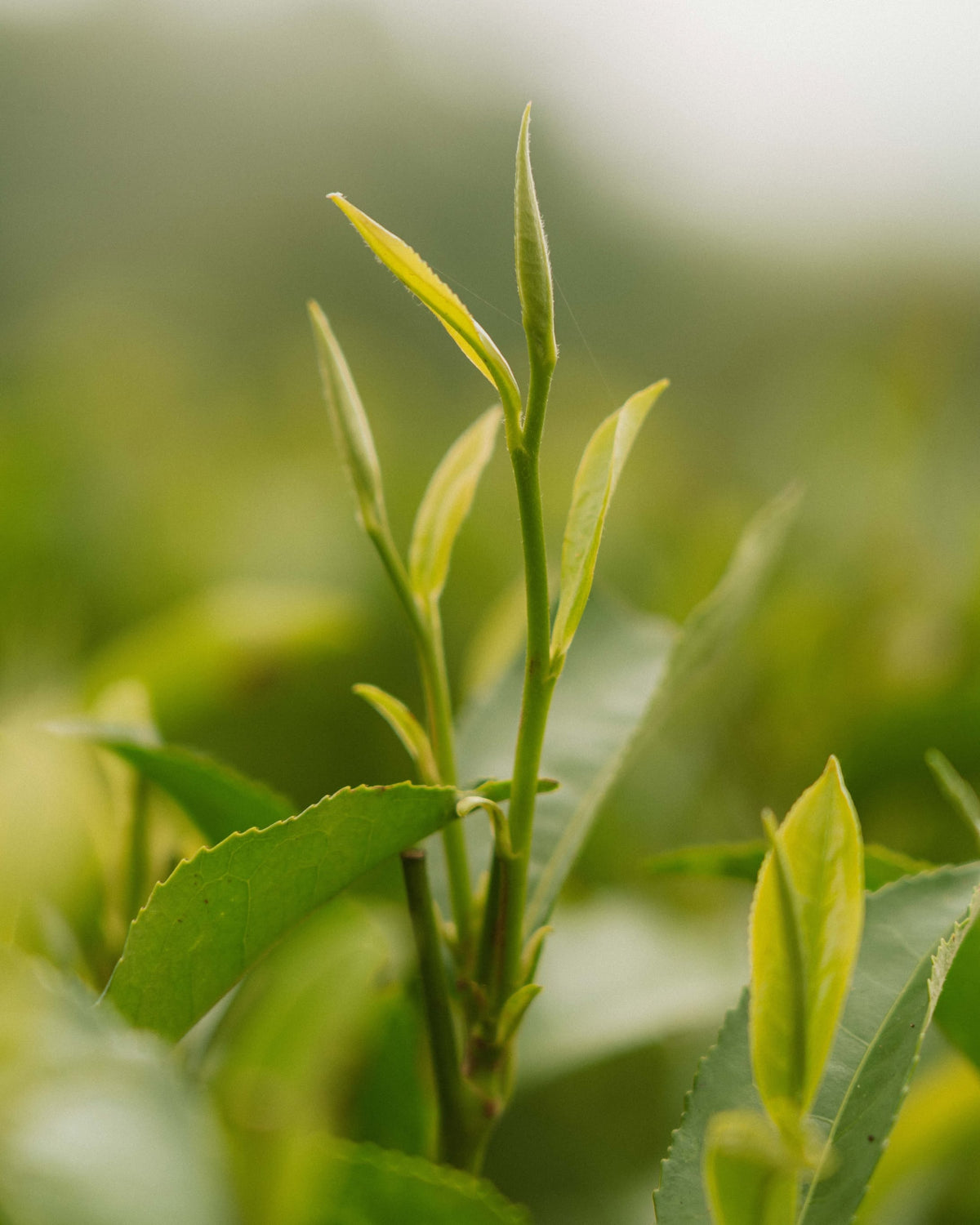
Sieh dir die schwarzen Tees unserer Himalaya-Kollektion einmal genauer an: Trotz gemeinsamer Herkunft und Kategorie sind die optischen Unterschiede verblüffend – von einer hellen, fast durchscheinenden Farbe, die eher an einen Wulong oder sogar einen grünen Tee erinnert, bis zu einem dunklen Braun am anderen Ende des Spektrums. Ihre Aromen reichen von zart und blumig bis hin zu vollen, intensiven Noten.
 Schwarzer Tee ist im Himalaya zu Hause
Zuerst das Wichtigste: Unsere gesamte Kollektion besteht aus reinen Tees. Anders als Mischungen, die Kräuter, Früchte und andere Zutaten enthalten, verdanken reine Tees ihre Farbe und ihren Geschmack allein dem Terroir, dem Erntezeitpunkt und der Verarbeitung. Nicht jeder Garten bringt die richtigen Blätter für jeden Teestil hervor, und es heißt oft, dass sich ein Tee von einem Ort nirgendwo sonst nachbilden lässt. Traditionell sind der Himalaya und besonders Darjeeling für ihre schwarzen Tees berühmt, weil Terroir und Verarbeitungsmethoden sich für diesen Stil besonders eignen. Doch innovative Tea Maker schaffen längst Spezialitäten wie unseren Silver Needle Full Moon, einen weißen Tee aus einer seltenen Ernte. Und auch grüne Tees haben – wenn auch weniger bekannt – ihren Platz in der Teeproduktion des Himalaya.
Intuition trifft Erfahrung
Ein großer Teil der Farbe eines Tees hängt vom Grad seiner Oxidation ab. Denk an einen aufgeschnittenen Apfel, der auf der Arbeitsplatte liegen bleibt: Je länger er liegt, desto brauner wird er. Nach der Ernte welkt schwarzer Tee mehrere Stunden. Anschließend werden die Blätter gerollt, um ihre Struktur aufzubrechen und die Oxidation in Gang zu setzen. Mit Intuition und Erfahrung passen Tea Maker die Intensität des Rollens sowie Dauer und Temperatur der Oxidation an, bis das Ergebnis stimmt.
 Himalaya Spring hat eine helle Farbe und eine grasige Frische, wie man sie eher von einem grünen Tee erwarten würde. Doch während grüner Tee direkt nach der Ernte erhitzt wird, um die Oxidation zu verhindern, werden die Blätter des Himalaya Spring gerollt und vor dem Trocknen leicht oxidiert.
Der reife, fruchtige Muskatell-Geschmack unseres bernsteinfarbenen Second Musk Flush, den wir vom Jungpana Tea Estate beziehen, wird Fans klassischer Darjeeling-Tees begeistern. Im Sommer lassen lange Tage und warme Temperaturen die Blätter dicker und kräftiger wachsen – so zeigen sie ihren üppigsten und ausdrucksstärksten Charakter.
Autumn Flush ist noch eine Nuance dunkler. Weil die Blätter im Herbst langsamer wachsen und ihr Geschmack weniger konzentriert ist, werden sie bei höherer Temperatur getrocknet. Das lässt sie nachdunkeln und bringt warme, aber ausgewogene Noten von Eiche und Karamell hervor.
Und schließlich Himalaya Imperial Black, der dunkelste Tee unserer Kollektion. Er wird langsam und behutsam gerollt und ruht anschließend mehrere Stunden auf speziellen Oxidationstischen, wo er seine tiefbraune Farbe und seine vollen Noten von Kakao und Backpflaume entwickelt.
Jetzt, wo du weißt, warum schwarze Tees einen so großen Teil unserer Kollektion ausmachen, bleibt nur noch eines zu tun: genießen!
Mit Liebe aus Berlin,
Eduard/